• Welcome to the ElgrandOC forum.

    You will find that the majority of the forum is locked, but do not worry. You can unlock more content by registering to the forum completely free. Sign up is automatic, does not require email confirmation and is instant. Feel free to browse through the sections to see what topics have been covered before you register.
    You can register for an account by CLICKING HERE

    Once you have registered, you will unlock more of the forum content. You will not unlock all of the content until you have reached 10 posts. This is to give you an opportunity to chat to existing members and help to integrate you into the forum community.
    We are a friendly and helpful community and there is a wealth of infomation contained within the forum. Please feel free to register, introduce yourself and get to know your fellow members.

    Feel free to look at the Frequently Asked Questions section, the Meets/Events section and the Competition Section without having to register.
    We look forward to getting to know you and help you with any questions or problemd you have with your Elgrand.

What have you done to your Elgrand today?

Replaced the LPG vapour filter and put through some IC12 injector cleaner to see if it helps with a much longer than when I first started using it initial switch over, even when warm, slightly lumpy idle on gas when warm, and sometimes after 40 minutes ISH driving giving 3 beeps and sometimes dropping back to petrol even with a full tank.

From warm it restarts and switches over practically immediately now. We'll see if it does it quicker while cold when I go out next.

But annoyingly managed to drop an engine cover nut down into the under tray and no chance of seeing where it went. So down to 2 now. Cue the Annoying rattle that will inevitably show up and drive me mad until I find a replacement.
 
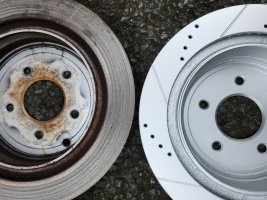
Rear brake refresh - stuck caliper pin caused a right mess
 

Attachments

  • IMG-20251018-WA0003.jpeg
    IMG-20251018-WA0003.jpeg
    466.3 KB · Views: 15
  • 20251018_163345.jpg
    20251018_163345.jpg
    819 KB · Views: 15
  • old vs new.jpg
    old vs new.jpg
    554.1 KB · Views: 15
Is that a Christmas Tree in the Elgrand André?
 
A couple of nice easy jobs today in the warm and dry

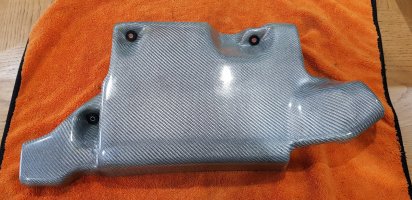
Cleaned, polished and waxed the Bahn Brechen Engine cover and fitted new grommets

Bahn Brechen Engine Cover After Clean With Grommets.jpg

Also tried out the washers and dome nuts on it that I bought from Aliexpress to bling it up a bit.

Bahn Brechen Engine Cover After Clean With Washers And Dome Nutsjpg.jpg

I have not put the Bahn Brechen sticker on it yet that I had made as not certain how the new Cusco brace which is still on the boat at the minute on the way from Japan will fit over the top of it and the sticker might need to go further back on the cover to look right so the brace is not obscuring it.

Bahn Brehen Engine Cover with Sticker.jpg

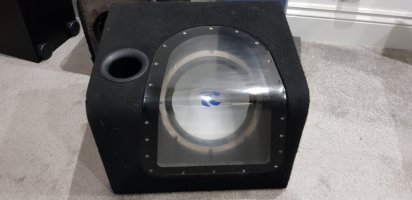
Cleaned and tidied up and also spent a bit of time wet and drying the perspex cover which was quite badly marked on the 10inch sub that I bought second hand on Facebook Marketplace back in the summer ready to go back in.

10 Inch Sub.jpg


10 Inch Sub Amp.jpg

Still needs a bit of the carpet stuck back down and may have another go at the perspex as it is still a bit hazy.

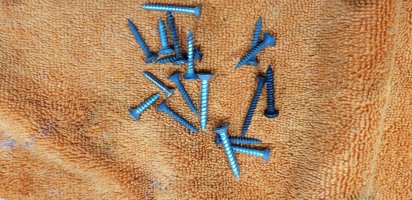
Have ordered from Aliexpress some replacement stainless steel torq screws to replace the assortment of screws that I have taken out that were holding the perspex cover in place

10 Inch Sub Screws.jpg

I have also today spent a bit of time researching a rear roof spoiler and think that I have found something that will work with a bit of modifying and is not too much money.:D
 
Rear brake refresh - stuck caliper pin caused a right mess
What is your chosen grease to try and avoid a stuck caliper? When i was changing my wheal bearing i regreased mine and found most the grease i had put in had gone.

Is it just a case of needing to service brakes if milage is low giving the grease time to escape?
 
Last edited:
What is your chosen grease to try and avoid a stuck caliper? When i was changing my wheal bearing i regreased mine and found most the grease i had put in had gone.

Is it just a case of needing to service brakes if milage is low giving the grease time to escape?
TBH I wouldn't know, bought new calipers fully greased up, no doubt wiser people on here can answer your question
 
What is your chosen grease to try and avoid a stuck caliper? When i was changing my wheal bearing i regreased mine and found most the grease i had put in had gone.

Is it just a case of needing to service brakes if milage is low giving the grease time to escape?
Don’t know if this would be correct so please check/please all you lovely people advise better - but because there is a rubber component involved I used this - https://www.eurocarparts.com/p/triple-qx-red-rubber-grease-500g-526770270
Any alternative views??
 
Don’t know if this would be correct so please check/please all you lovely people advise better - but because there is a rubber component involved I used this - https://www.eurocarparts.com/p/triple-qx-red-rubber-grease-500g-526770270
Any alternative views??
I have asked Chat GBT....

Why grease disappears from caliper sliders

Caliper slider pins live a hard life:
• Heat cycles (even from occasional braking) break some greases down.
• Rubber boots aren’t perfect — condensation creeps in, moisture emulsifies the grease, it thins, it washes, it corrodes.
• Rubber compatibility is crucial — a shocking amount of people unknowingly use a grease that slowly swells the rubber boots, which then creates drag on the pin and wipes the grease off.
• Low mileage = low heat + more moisture retention.
A car driven daily dries out its calipers by heat.
A car driven once a week keeps the moisture party going in there.

This is why low-milers, garaged classics, and “only goes to Tesco on Thursdays” cars often seize pins more than motorway pounders.


---

What grease should be used?

There are really only three correct choices — everything else is folklore or a gamble.

1. Silicone Brake Grease (Sil-Glyde, ATE Plastilube, Permatex Silicone Ceramic)

This is the gold standard for rubber compatibility.

Pros:
• Totally safe on EPDM rubber boots
• Doesn’t wash out
• Good for long intervals
• Stays slippery even after drying to a film

Cons:
• Can thin out with extreme heat (track use etc.)

Silicone is brilliant for cars that sit around or do short runs. Moisture won’t emulsify it.


---

2. Ceramic Brake Grease (Ceratec-type greases)

Often labelled as “ceramic brake lubricant”.

Pros:
• High temp tolerance
• Stays where it’s put better than copper grease
• Safe-ish on rubber, but depends on the formula

Cons:
• Not all ceramic greases are rubber-safe — you have to check.

Good for calipers that get hotter and for heavy vehicles.


---

3. Synthetic Caliper Pin Grease (e.g., PAG-based greases)

This includes Toyota’s red rubber grease (Castrol red rubber grease, NLGI 2).

Pros:
• Designed for pins
• Excellent rubber compatibility
• Doesn’t attract water
• Very persistent

Cons:
• Doesn’t like extreme heat as much as ceramic

Red rubber grease is still one of the most reliable and boringly effective choices.


---

What NOT to use

These are the culprits behind the “my pins seized again” threads:

• Copper slip — swells boots, wipes off, attracts moisture.
• Lithium grease — wrong base oil, will destroy the rubber boots.
• Wheel bearing grease — great for bearings, terrible for calipers.
• Petroleum-based anything unless specifically stated rubber-safe.


---

Does low mileage cause slider-pin seizures?

Yes — absolutely.

A car that does 3,000 miles a year is more vulnerable than one doing 12,000 because:

• Less heat = more moisture stays trapped
• Grease never flows or redistributes
• Rust can form on the pin or bore
• Boots age faster when they’re never exercised

Think of it like unused joints on the body: everything stiffens up when you don’t move.


---

Should you use a better grease, or service the brakes more often?

Kind of both, but with nuance:

If you’re using a good silicone or red rubber grease, you can stretch intervals.

Realistically:
• Every 1–2 years is fine even on a low-mileage car.
• If you do almost no miles, consider every MOT or service.

If you use cheaper grease, service frequency matters more.

These greases dry out and break down sooner.

There is no grease that lets you “fit and forget forever.”

Moisture always wins eventually. Rust does not negotiate.


---

The practical take-home

To keep your calipers sweet for years:

1. Use a rubber-safe grease:
• Silicone grease (Plastilube)
• Red rubber grease
• A proper high-temp ceramic caliper grease


2. Check your slider boots:
A tiny tear is enough to murder the pins.


3. Service interval for low-milers:
Every 12–18 months, even if the pads look fresh.


4. Clean pins properly before regreasing:
Wire wool + brake cleaner + a hint of mechanical respect.
 
I have asked Chat GBT....

Why grease disappears from caliper sliders

Caliper slider pins live a hard life:
• Heat cycles (even from occasional braking) break some greases down.
• Rubber boots aren’t perfect — condensation creeps in, moisture emulsifies the grease, it thins, it washes, it corrodes.
• Rubber compatibility is crucial — a shocking amount of people unknowingly use a grease that slowly swells the rubber boots, which then creates drag on the pin and wipes the grease off.
• Low mileage = low heat + more moisture retention.
A car driven daily dries out its calipers by heat.
A car driven once a week keeps the moisture party going in there.

This is why low-milers, garaged classics, and “only goes to Tesco on Thursdays” cars often seize pins more than motorway pounders.


---

What grease should be used?

There are really only three correct choices — everything else is folklore or a gamble.

1. Silicone Brake Grease (Sil-Glyde, ATE Plastilube, Permatex Silicone Ceramic)

This is the gold standard for rubber compatibility.

Pros:
• Totally safe on EPDM rubber boots
• Doesn’t wash out
• Good for long intervals
• Stays slippery even after drying to a film

Cons:
• Can thin out with extreme heat (track use etc.)

Silicone is brilliant for cars that sit around or do short runs. Moisture won’t emulsify it.


---

2. Ceramic Brake Grease (Ceratec-type greases)

Often labelled as “ceramic brake lubricant”.

Pros:
• High temp tolerance
• Stays where it’s put better than copper grease
• Safe-ish on rubber, but depends on the formula

Cons:
• Not all ceramic greases are rubber-safe — you have to check.

Good for calipers that get hotter and for heavy vehicles.


---

3. Synthetic Caliper Pin Grease (e.g., PAG-based greases)

This includes Toyota’s red rubber grease (Castrol red rubber grease, NLGI 2).

Pros:
• Designed for pins
• Excellent rubber compatibility
• Doesn’t attract water
• Very persistent

Cons:
• Doesn’t like extreme heat as much as ceramic

Red rubber grease is still one of the most reliable and boringly effective choices.


---

What NOT to use

These are the culprits behind the “my pins seized again” threads:

• Copper slip — swells boots, wipes off, attracts moisture.
• Lithium grease — wrong base oil, will destroy the rubber boots.
• Wheel bearing grease — great for bearings, terrible for calipers.
• Petroleum-based anything unless specifically stated rubber-safe.


---

Does low mileage cause slider-pin seizures?

Yes — absolutely.

A car that does 3,000 miles a year is more vulnerable than one doing 12,000 because:

• Less heat = more moisture stays trapped
• Grease never flows or redistributes
• Rust can form on the pin or bore
• Boots age faster when they’re never exercised

Think of it like unused joints on the body: everything stiffens up when you don’t move.


---

Should you use a better grease, or service the brakes more often?

Kind of both, but with nuance:

If you’re using a good silicone or red rubber grease, you can stretch intervals.

Realistically:
• Every 1–2 years is fine even on a low-mileage car.
• If you do almost no miles, consider every MOT or service.

If you use cheaper grease, service frequency matters more.

These greases dry out and break down sooner.

There is no grease that lets you “fit and forget forever.”

Moisture always wins eventually. Rust does not negotiate.


---

The practical take-home

To keep your calipers sweet for years:

1. Use a rubber-safe grease:
• Silicone grease (Plastilube)
• Red rubber grease
• A proper high-temp ceramic caliper grease


2. Check your slider boots:
A tiny tear is enough to murder the pins.
may have maxed characters there
 
may have maxed characters there
some chat gbt recommendations

PERMATEX Silicone Brake Lube 8 oz 24112]() — widely regarded as a “safe bet” silicone grease for brake calipers. Rubber-safe, doesn’t wash out easily, and works well for slider pins or anywhere moisture might be present. Great for low-mileage or wet-climate cars (which sounds familiar 👀).

[Granville Red Rubber Grease]() — a classic rubber-safe grease designed for brake seals, boots and pistons. If you’re rebuilding calipers or protecting rubber parts, this is a go-to. Often cited in older-school car communities for its compatibility and longevity.

[Granville Ceramic Brake Grease 70 g]() — ceramic greases hold up better to higher temps (heavy braking, harder use). These work best on metal-metal contact areas or slider pins where heat and friction are a concern.

[Bigg Red Silicone Brake Caliper Grease]() — another silicone-based option; useful if you want something lighter-duty but rubber-safe. Good for periodic maintenance, especially when you’re not expecting extreme temp.

[Liqui Moly Brake Pin Grease]() — a well-known brand with good reputation for caliper slider pins. Balanced mix of water resistance, rubber safety, and staying power.

[Permatex Ultra Disc Brake Caliper Lubricant]() — a synthetic grease that works across a range of temperatures. Handy if you want a “set it and forget it for a while” solution, particularly on disc-brake slider pins.

[ARC Silicone Grease 100 g Tube]() — slightly more heavy-duty silicone grease; good if calipers live in damp or salty climates (e.g. winter roads in the UK).

[Silverhook Ceramic Grease Tube SGPGT70]() — a ceramic high-temperature grease suited to slider pins on heavier/brisk cars, where heat from braking is more than occasional.


---

🧰 Suggested usage strategy (with these greases)

For rubber seals, piston boots, o-rings etc. — use a rubber-safe grease such as the Red Rubber or silicone-based products. Those areas hate copper or lithium-based greases.

For slider pins / metal-on-metal contact — ceramic or synthetic caliper greases tend to hold up best, especially if temps rise (or if the car sits and gets damp).

For a low-mileage / wet-climate / infrequently driven car (like many UK cars) — silicone or red-rubber grease is often best because they resist moisture and don’t degrade rubber.

If you drive frequently or brake hard (spirited driving, hills, heavy load) — ceramic or high-temp synthetic is worth it because of better thermal stability.
 
I’ve used the permatex and I’ve used granville products both to good effect.
Back in the day my go to for most things ( as it was for many ) was copper slip which is why I can say with confidence it’s absolutely shite ( you learn through experience)
 
This kit is also good although not a lot in them ( enough for all four corners once or twice maybe)
View attachment 118593
Turns out the ceramic grease i took a fair while choosing for pins is only recommended for pads. I like this pack, clearly tells you where to put what, when you have forgotten your research the labels are so clear! Plus it's been satisfying a demanding user.
 
I never heard before about putting any kind of lubricant on the pads 😳
back in the day when i served my time as a mechanic i was taught to grease the back of the pads, it was to stop squeal, but modern brakes and pads dont need any, except the sliding pins.
 
back in the day when i served my time as a mechanic i was taught to grease the back of the pads, it was to stop squeal, but modern brakes and pads dont need any, except the sliding pins.

Got to say i have never had issues with noise so far, touch wood....

Here is Chat GBT's take on it:

Brake pads are a bit like teenagers: they’re fundamentally fine, but when they’re under pressure they can scream, rattle, and generally make their presence known in a very undignified way. The little smear of lubricant on the back of the pad is there to keep the whole braking opera from turning into a squealing violin solo.

Here’s the physics, stripped down and friendly.

When you brake, the pad doesn’t just press against the disc. It also vibrates. Those vibrations travel straight into the caliper pistons and then into the caliper body. Metal-on-metal at those interfaces acts like a tuning fork. That’s the squeal. The backing plate acts as the bridge that couples the vibration into the rest of the system.

A thin smear of proper high-temp brake grease on the back of the pad acts like a mechanical duvet. It damps (reduces) the vibration transfer between pad and piston/caliper. It’s not lubrication in the traditional sense; nothing’s sliding. You're adding a layer that interrupts vibrational energy.

A few practical notes, since you’re deep in Elgrand lore:

• Only ever put it on the pad backing plate where it contacts the piston(s) or the carrier “ears,” depending on design.
• Never get any on the friction surface—pads hate that like cats hate baths.
• use a high-temperature product designed for brakes (copper grease, ceramic brake grease, or silicone-based grease depending on the application). The modern favourite is ceramic because it’s friendly with ABS sensors and doesn’t mess with rubber.

There’s a second reason as well, more mundane: it reduces the chance of the pad “chattering” or moving slightly in the carrier, especially on floating-pad designs. Again, all about damping vibration.

But the headline truth remains: smooth braking is quiet braking, and that tiny smear is doing the heavy lifting in the acoustics department.

Right, let’s talk Elgrand E51 brakes properly — because Nissan, in their infinite late-90s wisdom, built a system that works beautifully as long as you help it along in the right places.

1. Where your E51 calipers tend to chatter or squeal

The E51 uses a floating caliper front and rear. That means:

• The pads sit in a metal carrier and are meant to slide freely.
• The inner pad rests directly on the piston face.
• The outer pad rests against the caliper body through the carrier.

Where things get noisy is usually one of three spots:

A) The pad backing plate → piston contact face
This is the big one. When the pad vibrates, the piston becomes a loudspeaker. Lubricant or a proper anti-squeal compound damps this vibration.

B) The pad “ears” → carrier abutments
If the pad ears corrode into the carrier (or the stainless shims get crusty), the pad moves with a start-stop “stick-slip” motion. That creates chatter and squeal. A tiny amount of ceramic grease here works wonders after you wire-brush the abutments clean.

C) Caliper slider pins
If these dry out, the caliper can hang slightly, causing uneven pad pressure and intermittent squeal. The E51 sliders are particularly susceptible because they live low and salty.

2. Which grease behaves best for the Elgrand

You want three different products for three different jobs. Using one “does everything” grease is the usual cause of problems months later.

A) Back of the brake pad → Anti-squeal compound or ceramic brake grease

Ceramic brake grease is the best all-rounder because: • It stays stable up to around 1,400°C
• It isn’t conductive → safe near ABS sensors
• It doesn’t swell rubber
• It resists wash-off far better than copper grease

Copper grease works, but it’s 1990s tech and can interfere magnetically if it ends up where it shouldn’t (ABS sensors do not appreciate copper glitter).

Look for: Liqui Moly Ceramic Brake Grease or Mintex Ceratec.

B) Carrier abutments (pad ears)

Again, ceramic brake grease — a microscopic smear. The point here is prevention of corrosion + damping of chatter. You do NOT want it dripping anywhere near the disc.

C) Slider pins

This is a different job entirely.

The E51 needs a high-temp silicone-based caliper grease, because the slider boots must not be attacked by petroleum-based products.

Perfect examples: • ATE Plastilube
• Carlube Silicone Brake Grease
• Permatex Silicone Extreme Brake Parts Lubricant

This stuff stays jelly-like for years and won’t vanish, melt, or harden.

3. Why low-mileage Elgrands jam sliders more often

It’s counterintuitive, but low mileage is worse than high:

• The sliders don’t get warm regularly → moisture stays longer.
• The caliper barely moves for months → grease dries in place.
• Boots age faster when static because micro-cracks form and let in water.

Your fix is simple and proactive: strip/clean/regrease sliders every 12–18 months regardless of mileage. That’s the secret to never having a dragging caliper again.

4. The best “anti-squeal” method for the E51

If you want the trouble-free setup:

1. Polish the carrier abutments with a file or Dremel until bare metal shines.


2. Ceramic grease (microscopic smear) on pad ears.


3. Ceramic grease (pea-sized amount spread thin) on the pad backs where the piston meets.


4. Silicone grease on slider pins.


5. Make sure the anti-rattle clips actually spring properly — they get lazy with age. If they don’t bite the pad firmly, replace them.


This combination gives you: • silent braking
• even pad wear
• no sticking
• no hot discs
• no early bearing/ABS sensor death-by-heat transfer

 
Back
Top